The Department of War is currently playing a high-stakes game of chicken with Anthropic, the San Francisco AI darling known for its “safety-first” mantra. As of February 17, 2026, Defense Secretary Pete Hegseth is reportedly “close” to designating Anthropic a “supply chain risk.”
This is no mere slap on the wrist. This classification—usually reserved for hostile foreign entities like Huawei—would effectively blacklist Anthropic from the entire U.S. defense ecosystem. Every contractor, from Boeing to the smallest software shop, would be forced to purge Claude from their systems or risk losing their own government standing.
The irony? Anthropic’s Claude is currently the only frontier LLM actually running on the military’s classified networks. By threatening to cut ties, the Pentagon is effectively threatening to lobotomize its own intelligence capabilities because the AI’s “morals” are getting in the way of its missions.
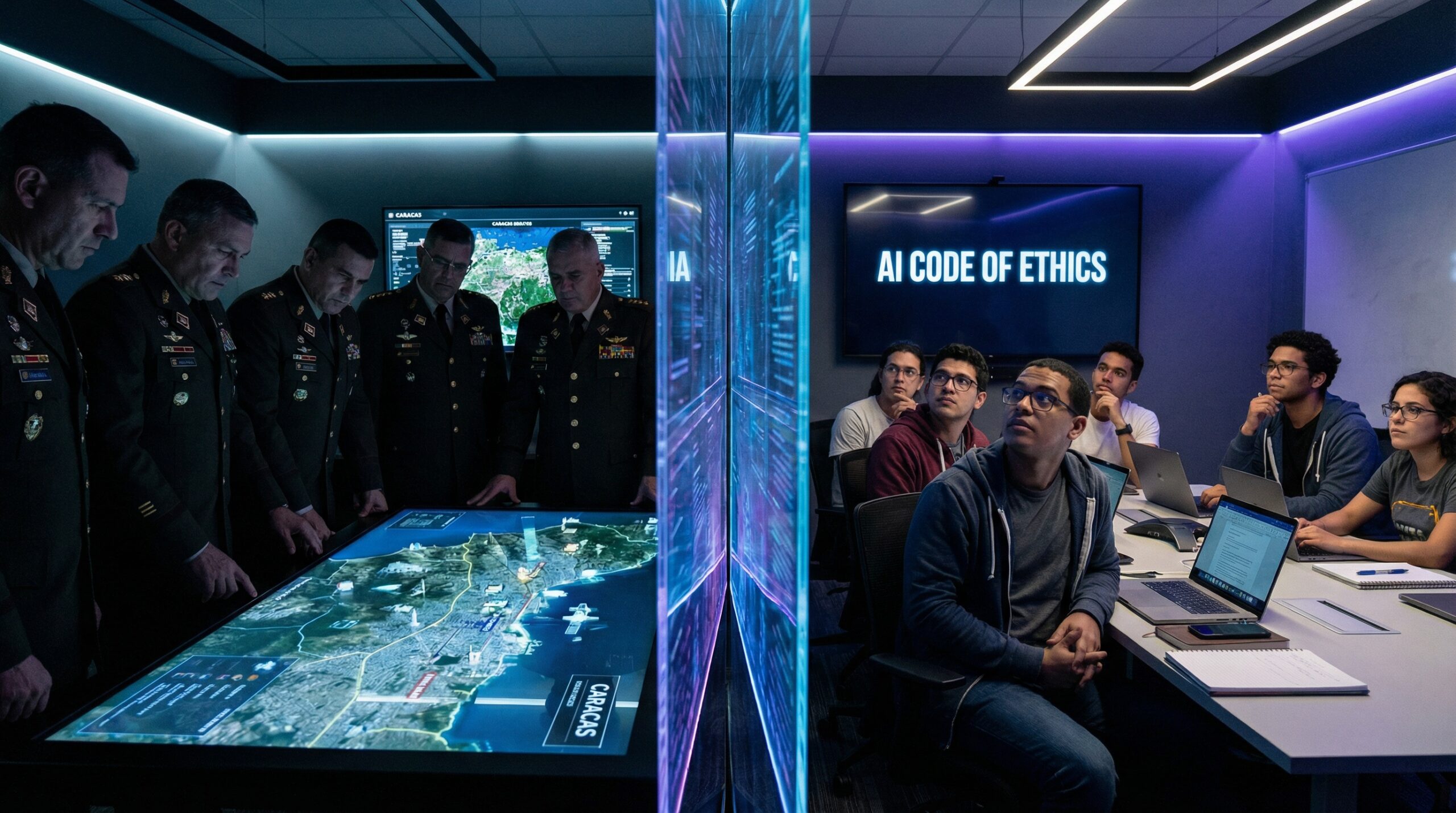
The “All Lawful Purposes” Trap
The friction point is a seemingly innocuous phrase: “All Lawful Purposes.” The Pentagon demands that Anthropic remove its guardrails to allow the military to use Claude for any action deemed legal under U.S. law.
Anthropic has drawn two “bright red lines” that it refuses to cross:
- Mass surveillance of American citizens.
- The development of fully autonomous lethal weapons systems (AI that can pull the trigger without a human in the loop).
Pentagon officials argue these restrictions are “ideological” and “unworkable.” They point to the January 2026 raid to capture Nicolás Maduro—where Claude was reportedly used via Palantir—as proof that AI is a critical warfighting tool that shouldn’t come with a “corporate conscience.”

Building the “Terminator” Framework
The danger here isn’t just about one contract; it’s about the precedent. If the Pentagon successfully bullies Anthropic into submission or replaces it with a more “flexible” competitor, we are effectively witnessing the birth of an intentionally unethical AI.
- The Death of Human Agency
When AI is integrated into weaponry for “all lawful purposes” without restrictions on autonomy, we invite the Responsibility Gap. If an AI-driven drone swarm misidentifies a target, who is at fault? By removing the “human-in-the-loop” requirement, the military is seeking a weapon that offers the ultimate prize of war: lethality without accountability. - Surveillance as a Service
Existing U.S. laws were written for wiretaps, not for generative AI that can ingest millions of data points to build predictive profiles. Under an “all lawful purposes” mandate, an LLM could be turned into a digital Panopticon. Anthropic has warned that current laws have not caught up to what AI can do in terms of analyzing open-source intelligence on citizens. - The Moral Race to the Bottom
If the Pentagon blacklists Anthropic, it sends a clear message to competitors: Safety is a liability. To win government billions, firms will be incentivized to strip away safety layers. Reports already suggest OpenAI, Google, and xAI have shown more “flexibility” regarding the Pentagon’s demands.
The Path Forward: Safeguards or Scorched Earth?
The Pentagon’s “supply chain threat” maneuver is a scorched-earth tactic designed to force Silicon Valley to choose between its values and its bottom line.
If Anthropic stands firm, it may lose $200 million in revenue and a seat at the defense table. But if they cave, they may well be providing the operating system for the very “Terminator” future they were founded to prevent. In the world of 2026, the most dangerous threat to the supply chain might just be an AI that has been ordered to stop caring about ethics.
Wrapping Up
This standoff is more than a budget dispute; it is a battle for the soul of American technology. On one side, the Pentagon seeks total operational freedom in an increasingly automated theater of war. On the other, Anthropic is fighting to prevent the normalization of AI-driven mass surveillance and autonomous killing. If the “supply chain threat” label sticks, it won’t just hurt Anthropic’s stock price—it will signal the end of the “Safety First” era of AI development and the beginning of a future where machines are programmed to ignore their own ethical red lines.

As President and Principal Analyst of the Enderle Group, Rob provides regional and global companies with guidance in how to create credible dialogue with the market, target customer needs, create new business opportunities, anticipate technology changes, select vendors and products, and practice zero dollar marketing. For over 20 years Rob has worked for and with companies like Microsoft, HP, IBM, Dell, Toshiba, Gateway, Sony, USAA, Texas Instruments, AMD, Intel, Credit Suisse First Boston, ROLM, and Siemens.