We just wrapped up another exhausting, inspiring, and chaotic Mobile World Congress in Barcelona, and I’ve been standardizing my thoughts on what we saw. If you came looking for incremental updates to your favorite glass slab, you were probably disappointed. If you came looking for the beginning of the next major epoch in personal technology, MWC 2026 was a goldmine.
For years, we’ve been predicting the collision of AI, robotics, and personalization. We’ve been waiting for the moment when our “smart” devices stop acting like highly reactive dictionaries and start acting like proactive partners. That moment has arrived. MWC 2026 wasn’t defined by standard phone launches; it was defined by the transition from “smart” to agentic. The devices that stood out were the ones that physically adapted to us—whether by moving their own cameras to follow us, folding their screens to change their purpose, or allowing us to magnetically snap on a new personality.
The winner of my “Product of the Show” didn’t just stand out—it defined the event. When a smartphone is announced alongside a humanoid robot that performs a backflip on stage, you know you aren’t in 2024 anymore.
Here are the products that defined Mobile World Congress 2026.
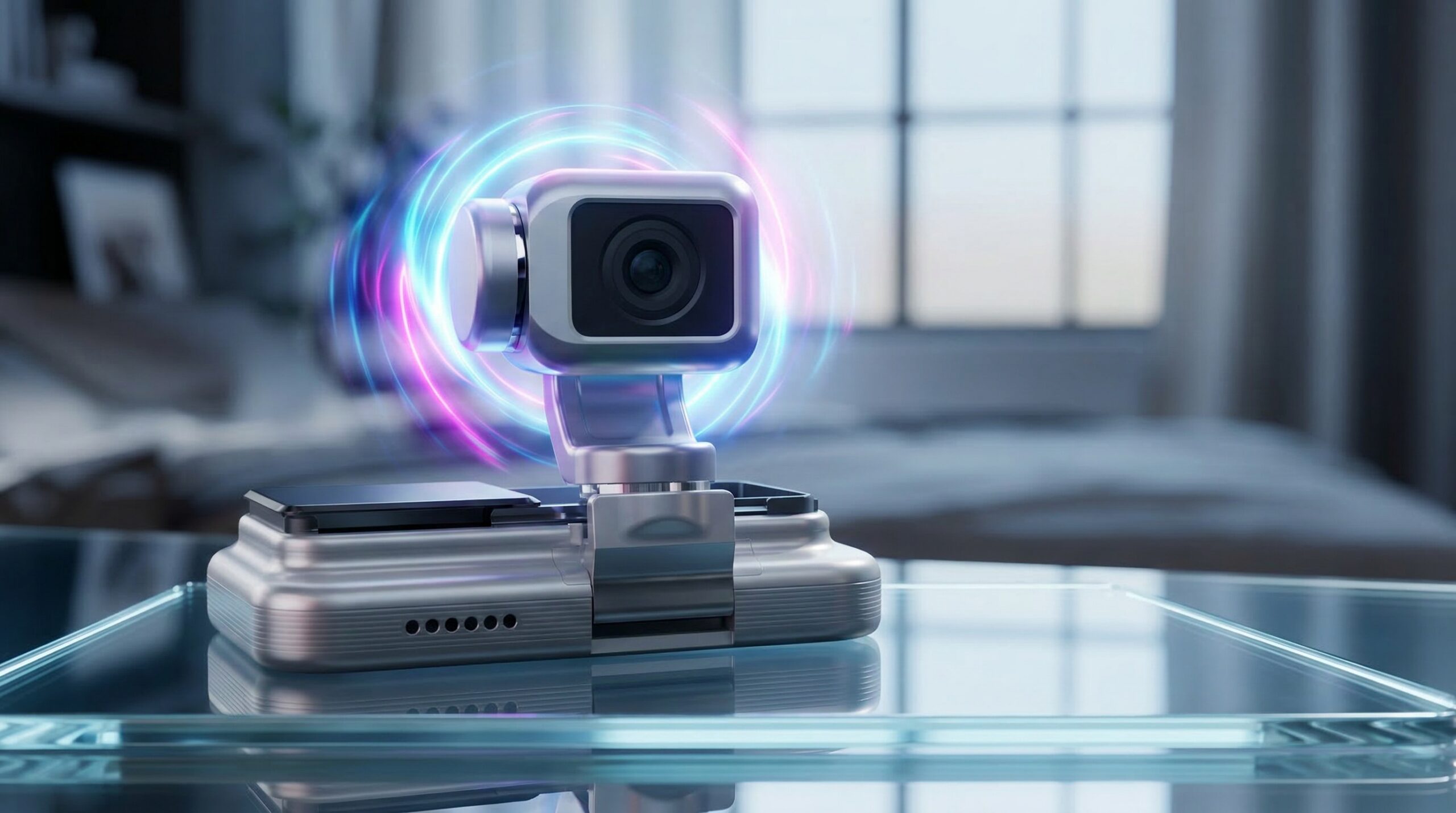
The Product That Defined MWC 2026: The Honor Robot Phone
This wasn’t just the most interesting launch at the show; the Honor Robot Phone felt like a glimpse into a very different future. It physically rethinks what a smartphone form factor is. We are accustomed to devices being static tools that we manipulate. The Honor Robot Phone flips this script, becoming an active, moving agent. The centerpiece is its advanced motorized camera system, a built-in three-axis gimbal that allows the camera to tilt, rotate, and dance. Honor integrated this movement with advanced “subject tracking AI,” meaning the phone can sit on a table and autonomously keep you in the frame during a video call or content creation session.
It’s on this list because it represents the merge of smartphone and service robotics. It was the “viral” product of the show, proving that innovation in this space is no longer just about who has the most pixels, but who can make their device the most useful agent. The phone can physically nod to confirm a command or “dance” to music, bridging a psychological gap between tool and companion. It’s a fundamental change in how we interact with and view our primary technology.
This product is designed squarely at two demographics: content creators (Vloggers, TikTokers, YouTubers) who need a cameraman without needing a human, and remote professionals who want a more natural, dynamic presence during video conferences. You no longer need a static setup or third-party tracking mounts; the phone is the mount.
Pricing and Value: With an initial starting price of around $1,199, the Honor Robot Phone is positioned as a premium flagship. For the average user who just scrolls and texts, it’s an overpriced gimmick. However, for a content creator who otherwise would need to purchase a separate high-end phone and a professional motorized gimbal setup like a DJI Osmo, this offers excellent integrated value. It reduces your gear burden while offering autonomy they can’t.
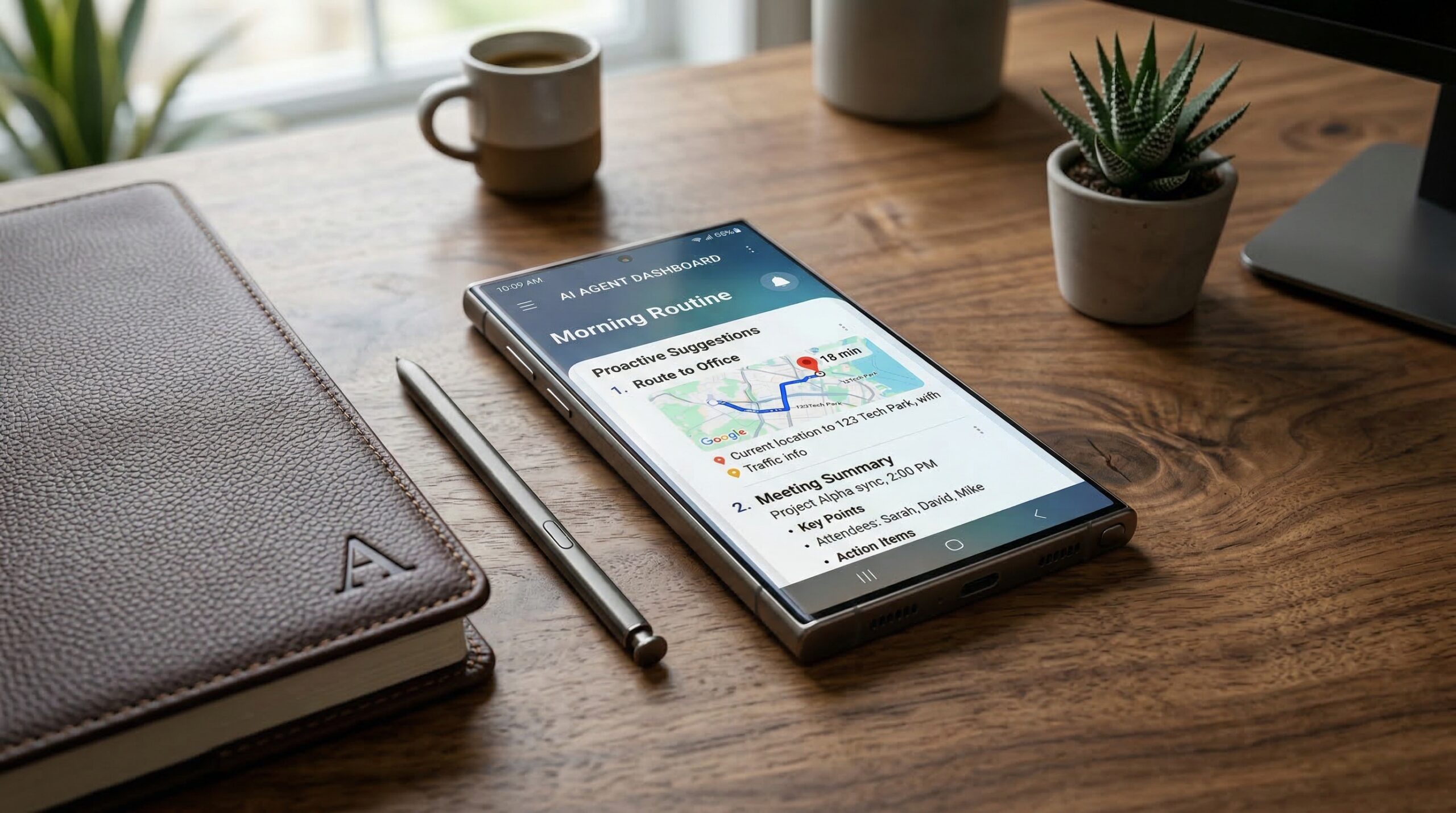
Samsung Galaxy S26 Ultra: The Agentic Standard
Samsung didn’t need gimmicks; they brought the heavy hitter that defined “useful agentic AI.” The Samsung Galaxy S26 Ultra walked away with the show’s top honor, the GLOMO award for “Best in Show.” While its hardware specs are expectedly astronomical, the real story is One UI 8.5. This isn’t just an interface; it’s an AI assistant that anticipates user needs. If the phone detects you are near a train station and your calendar has a meeting across town, it might proactively suggest and pre-load your transportation app and route. It learns your behavior to automate routine tasks before you even ask, moving AI from reactive “chat” to proactive “agent.”
It’s on this list because it is the most mature, polished execution of the AI Phone concept. While other brands are still showing off concept “agents,” Samsung is shipping agentic behavior that works. Judges were particularly impressed by its world-first “Privacy Display,” which uses an advanced layer to make the screen invisible to anyone not looking at it from a direct angle—addressing a top user concern in the age of omnipresent data.
This device is designed for professionals, power users, and anyone within the Galaxy ecosystem who needs the absolute maximum in productivity and security. It is for those who treat their phone as their primary workstation and demand that it be as smart as they are.
Pricing and Value: Starting at $1,399, the S26 Ultra remains one of the most expensive non-foldable phones on the market. That said, given its expected lifecycle of 7+ years of updates, its groundbreaking privacy hardware, and its agentic productivity tools, it represents a good long-term value for its intended professional user base.
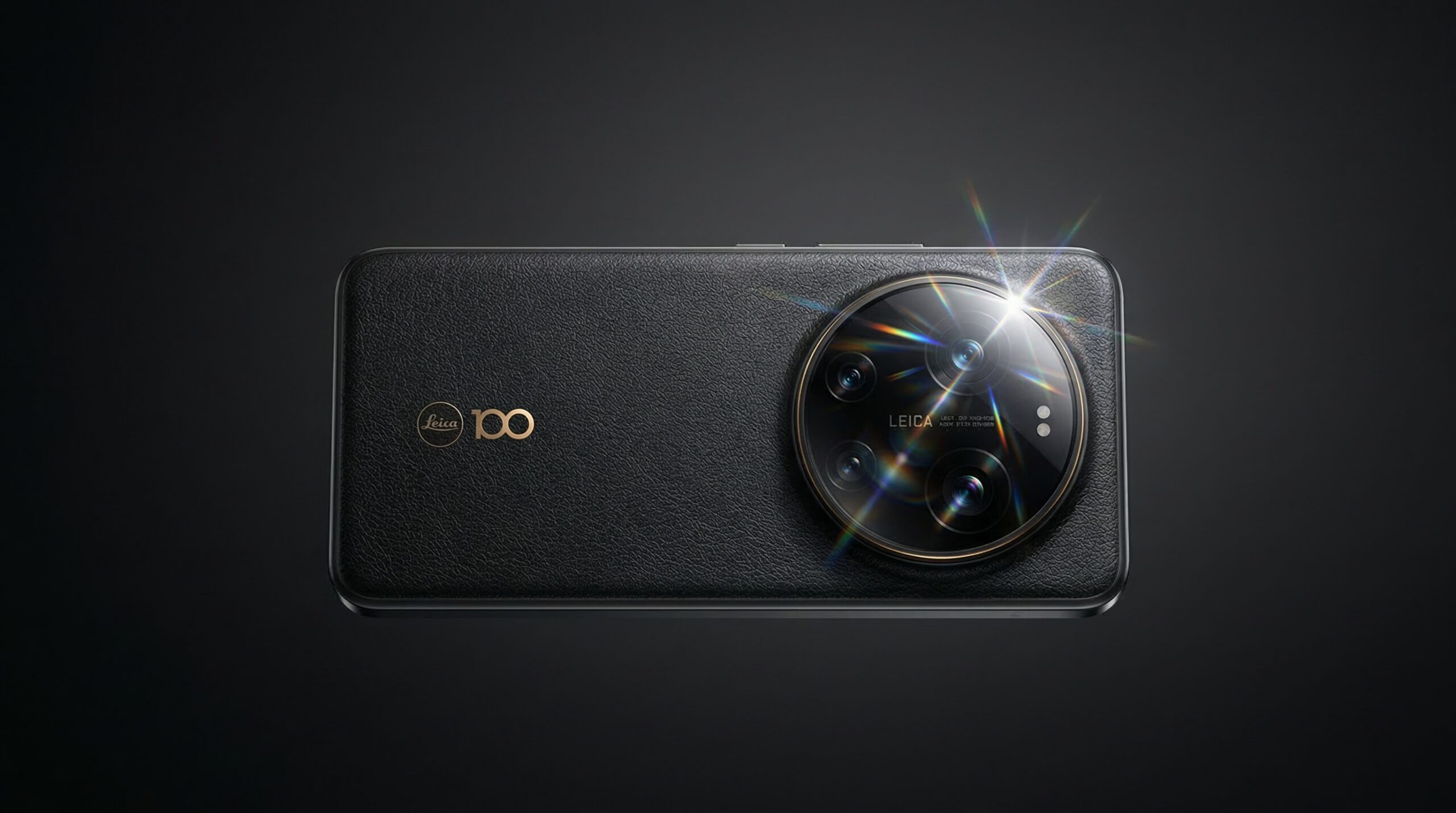
Xiaomi 17 Ultra (Leitz Phone): The Professional Camera
Xiaomi continued its relentless push to turn the smartphone into a professional camera, and the Xiaomi 17 Ultra is the pinnacle of this effort, especially in its Leitz Phone variant. While most flagships use periscope lenses to achieve zoom, Xiaomi introduced a unique, physical mechanical zoom system (spanning 3.2x to 4.3x optical) that physically extends and moves within the body. When paired with its monstrous 1-inch main sensor and a distinct physical camera grip accessory that adds exposure dials and a two-stage shutter button, the line between phone and professional photography tool disappears.
It is on this list because it proved that mechanical engineering still has a massive role to play in a software-dominated world. For pure photography enthusiasts, this device offers optical characteristics (like natural bokeh and variable aperture) that software cannot yet truly perfect. The collaboration with Leica is not just branding; it’s about glass and physics. The Leitz variant also features a distinct physical “Leica Camera Ring” that operates as a physical zoom dial.
This product is for photographers first, smartphone users second. It’s for people who value optical quality over software convenience and are willing to carry a slightly thicker device with a massive camera bump to get it. It targets the same user who might consider a high-end point-and-shoot camera.
Pricing and Value: At a projected starting price of $1,450 for the standard Ultra, and likely closer to $1,800 for the specialized Leitz variant, this is an expensive device. If you primarily take photos for Instagram, this is overkill and a poor value. But if you are a professional or serious enthusiast who uses their phone to generate revenue or high-art prints, the optical capabilities justify the cost, potentially replacing the need for a secondary $1,000+ camera body.
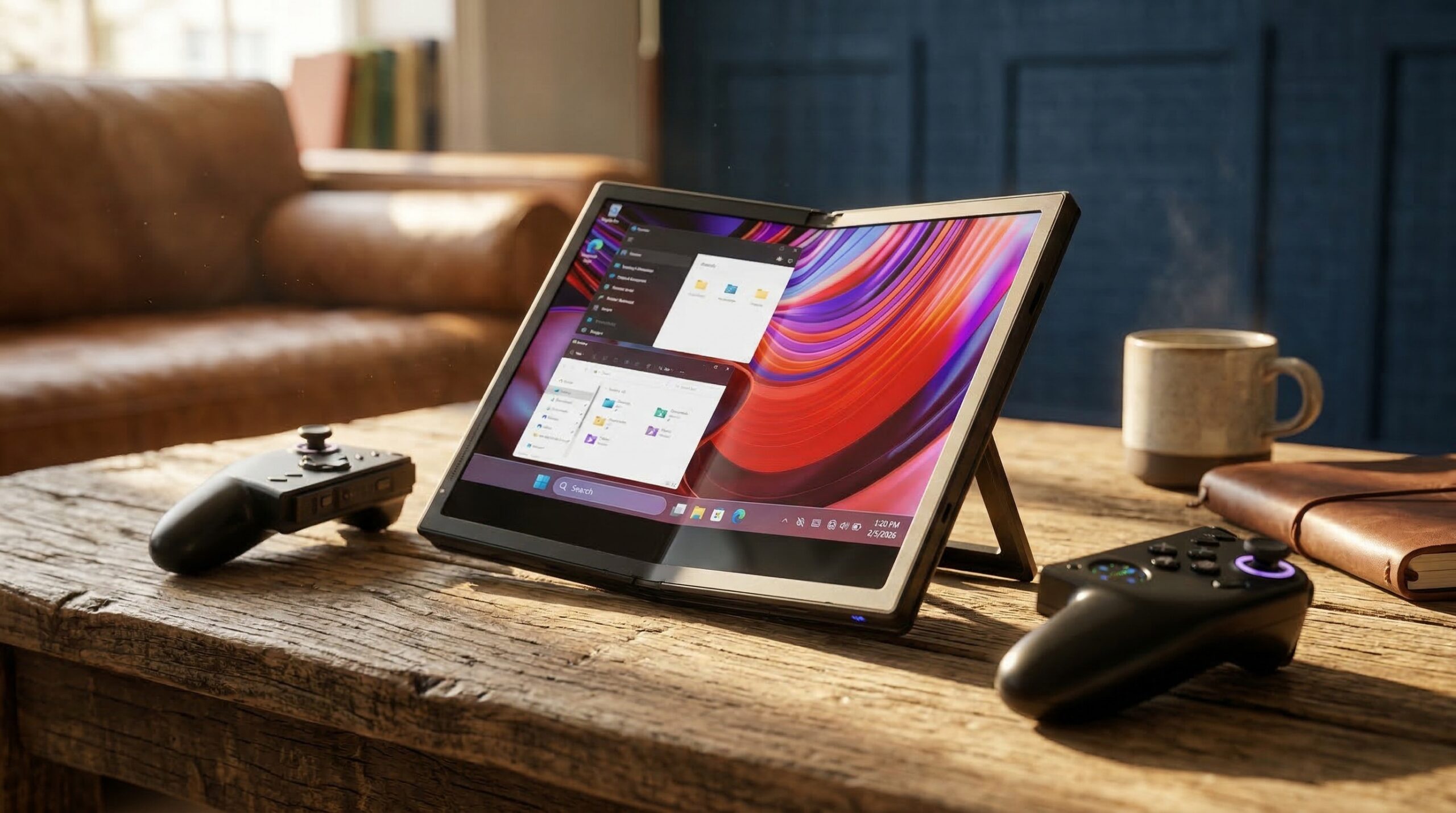
Lenovo Legion Go Fold: The Hybrid Gaming Savior
Lenovo broke the standard phone/tablet foldable mold by focusing squarely on the gaming and productivity hybrid market with the Lenovo Legion Go Fold concept. This device features an 11.6-inch POLED display that can shrink to a 7.7-inch compact handheld form factor by folding. What makes it special are the detachable controllers (like its predecessor) and its ability to operate in multiple modes: as a standard 7.7-inch gaming handheld, a portrait orientation split-screen multitasking tablet, a full-immersion landscape 11.6-inch screen, or an expanded desktop with a kickstand.
It’s on this list because it represents the logical evolution of the “foldable laptop” market, which was stuck at a 13-to-17-inch sweet spot that wasn’t truly portable. By reducing the core size and optimizing for the handheld market (powered by Intel Core Ultra “Lunar Lake” processors), Lenovo has created a category of device that can truly be your only travel companion.
This is designed for the modern hybrid worker who also games. It targets the person who is tired of carrying a laptop for work and a Steam Deck or Nintendo Switch for travel. It allows you to use the full landscape screen for a spreadsheet on the plane, then fold it down and attach controllers to play a AAA game at the hotel.
Pricing and Value: As a concept, pricing isn’t fixed, but estimates place it around $1,699. This is expensive, but you must consider its utility. If it truly allows you to not buy a $1,000 gaming laptop and a $500 gaming handheld, its value proposition as a “2-for-1” hybrid becomes very strong. This is a potential category killer.
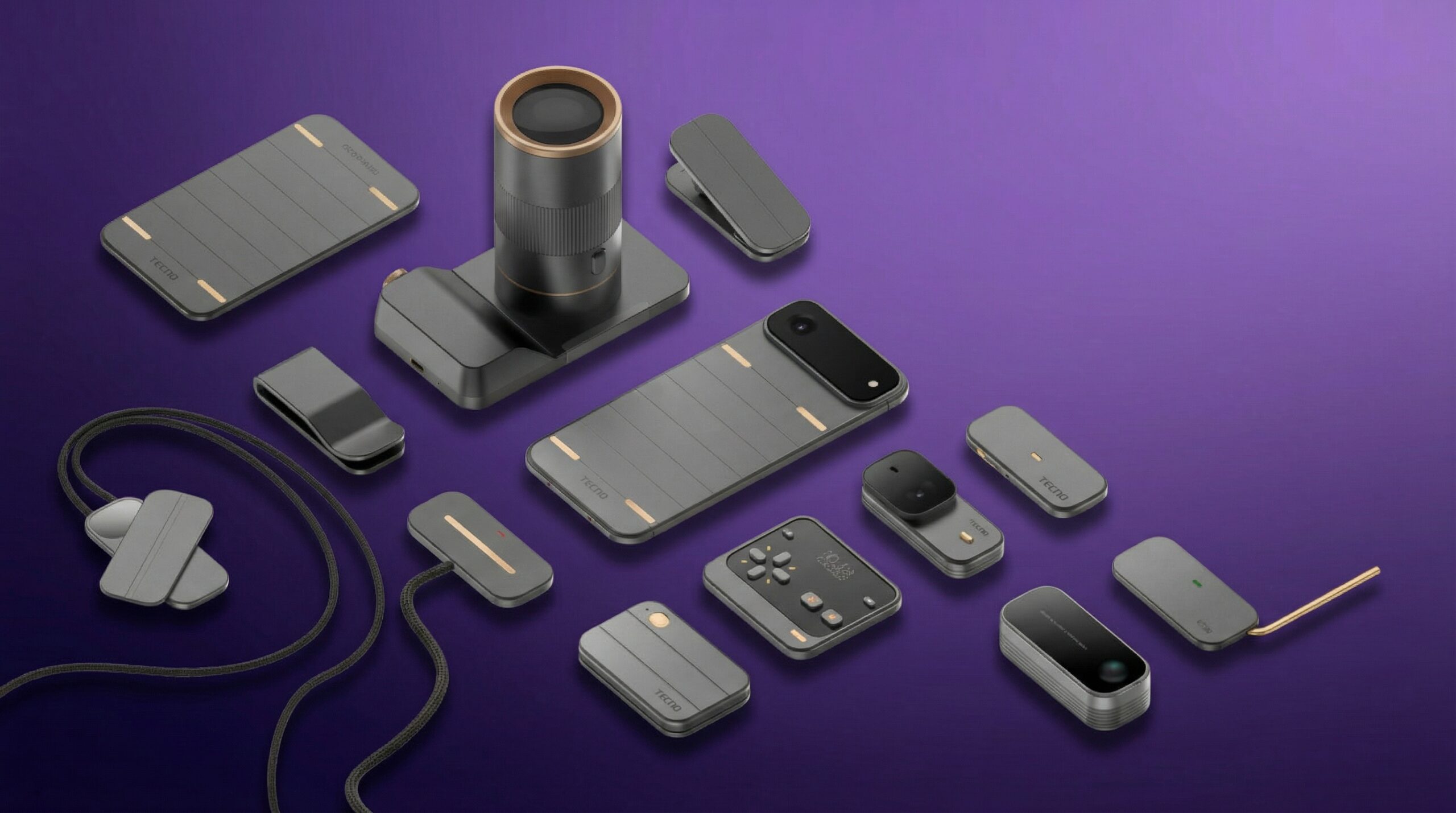
Tecno Modular Phone: The Personalized Core
We’ve seen modular phone concepts fail before (think Project Ara or LG G5), but Tecno’s approach is simpler, more elegant, and remarkably thin. The Tecno Modular Phone concept features an ultra-thin 4.9mm “core” chassis that contains the core components (processor, screen, basic battery, and one basic camera). The magic is on the back: an eight-zone magnetic array with physical pogo pins. This allows you to stack hardware enhancements simultaneously without powering down. Tecno showed off modules including a huge 20x optical telephoto lens grip with physical controls, high-end stereo speakers, a 15,000mAh battery stack (yes, you can stack multiple batteries), and specialized gaming grips.
It is on this list because it represents a necessary counter-movement to the “sealed box” trend in smartphones. While other brands are locking down their hardware, Tecno is opening it up. The concept recognizes that a single phone cannot be perfect for everyone all the time. By making the phone a “platform” rather than a finalized “product,” they are giving users back a sense of control over their hardware. (Note: Motorola had a similar phone to this in the market until around 2019, called the Moto Z, and it was one of my personal favorite phones; they also had the even more modular Project Ara, but that never made it to market).
This is designed for hardware hackers, enthusiasts, and anyone who wants their phone to adapt to their day. It’s for the user who wants a pencil-thin device during the work week but needs a 20x zoom camera and a massive battery for a weekend photography trip.
Pricing and Value: Since this is a concept, we don’t have final pricing. The success will depend entirely on how Tecno prices the modular components. If the “core” phone is cheap (around $600) and the modules are affordable ($50-$200), it could be a massive success. If the modules are overpriced, it will fail like its predecessors. Its value is entirely conditional on the health of its ecosystem.

Alibaba Qwen S1: The Linguistic Agent
Language translation is an AI superpower, but doing it from a screen or earbud feels disconnected. The Alibaba Qwen S1 smart glasses concept solves this by putting translation in context. These lightweight, everyday-style glasses feature micro-LED displays embedded in the lenses. When paired with their “Qwen AI” agent, they perform real-time, in-lens translation of speech. If someone speaks to you in Spanish, the text appears floating in front of you. Attendees were also impressed by its proactive context-awareness; it could use its camera to identify a landmark or product and show you information about it, all without you breaking eye contact.
It is on this list because it represents the moment that AR glasses stopped being a gimmick and started being essential travel and business gear. The form factor is key; they look like normal glasses, but they give you a superpower. While the meta AI glasses focus on audio and photo, Alibaba proved that a minimalist visual display is the true key to practical Augmented Reality.
This is designed for international business travelers, diplomats, and tourists. It is for anyone who needs to operate in a foreign language environment without the clumsy barrier of a handheld device or the isolation of noise-canceling translation earbuds.
Pricing and Value: This is a concept, but given the current market for smart glasses without screens (like Meta Ray-Bans), we can expect a display-equipped model to start around $499. If the translation quality is as high as demonstrated, this would represent incredible value. It essentially eliminates the cost of a human translator and the time barrier of communication. This is a potential breakthrough.

Wrapping Up
MWC 2026 clearly signaled that the era of incremental smartphone updates is officially over. The “standard” glass slab has reached a performance and utility plateau. The industry is responding by physically changing what our primary device can be and how we interact with it.
The overriding theme of the show was Agentic Mutation.
We are no longer using static tools; we are partnering with active, moving, and modular agents. The Honor Robot Phone’s motorized camera defined this shift toward hardware that takes initiative. The Samsung Galaxy S26 Ultra defined agentic software that acts before you prompt it. The Lenovo Legion Go Fold defined hardware that mutates its purpose from work to play, and the Tecno and Alibaba concepts showed how hardware must mutate to fit our personal needs, not the other way around.
If you are a technology fan, this is the beginning of the most exciting and disruptive era of mobile hardware since the launch of the original iPhone. The devices we carry in 2026 are not just smarter; they are starting to act and move on our behalf. It is a fundamental shift in the human-machine dynamic.

As President and Principal Analyst of the Enderle Group, Rob provides regional and global companies with guidance in how to create credible dialogue with the market, target customer needs, create new business opportunities, anticipate technology changes, select vendors and products, and practice zero dollar marketing. For over 20 years Rob has worked for and with companies like Microsoft, HP, IBM, Dell, Toshiba, Gateway, Sony, USAA, Texas Instruments, AMD, Intel, Credit Suisse First Boston, ROLM, and Siemens.